Tuesday, June 30, 2015

One Month Out

On May 29th 2015, the Golden Class became the youngest group of alumnae in the W network.

For approximately 90% of the school year, Graduation was how we kept eachother motivated. We all reassured eachother that it would be coming soon, that soon it would all be over. And then it was.

To quote an author whom I respect very much, it happened much like "the way you fall asleep: slowly and then all at once". One moment we were all struggling to make it through finals and then suddenly we were climbing those steps and crossing that stage.

Out of all of my time at Wellesley, the week leading up to graduation was certainly the most surreal. On one hand, it felt like we had finally arrived at this moment after years of hard work, everything was finally in place. On the other hand, it felt like we were playing dress up and just going through the motions of century-old traditions. What right did we have to be singing the alma mater at Baccalaureate? (That's for grown ups!)

One month out, the fervor of that time is starting to dissipate. Immediately following the ceremony, we packed our bags and headed out from campus. Some people went to travel the world, some moved to new cities, others started new jobs-all very much excited and nervous at the same time. The world is still spinning although we left, which is very good sign of things to come.

As for myself, I have halfway processed what is going on. While it doesn't really seem right that I won't be heading back this fall, I am ready to move forward to something new. I hope in the years to come that the darkest times will become like a bad dream and the good will forever be cemented in my memory. I'm hoping that in five years time I can greet the campus like an old friend.

But for now, goodbye and good luck to all.

Wednesday, April 15, 2015

An Open Letter to the Class of 2015


Over the past four years, Wellesley has been so much more than just a school for us; it has been a home and a place of profound growth both in and out of the classroom. It has brought a group of 600 very different students together, allowed us to explore different academic fields, cultures and perspectives and given us a vision of the adults that we hope to be. Looking back on our careers, it is easy to be cavalier about how we achieved what we did-we just woke up like this (flawless). However, we all know that this moment did not come easily. All students have fought battles to be here and I commend each and every one of you.

When I got my acceptance letter from Wellesley, I had the same reaction that I think a lot of my peers had. First came the natural joy and disbelief that Wellesley had wanted me in the first place. And then I saw the little magnet that was included in my Welcome Package and I thought to myself “...Yellow?” I had been hoping to emulate my sister’s class of regal purple but would have taken literally any color but yellow. It was so obnoxiously bright and persistent. Over the years however, the color has won my respect. Yellow is a color meant to make you notice and if we expand our reach to include gold, it is one of the most flexible and precious materials we have. There is a method in Japanese ceramics called kintsukuroi, whereby fragmented pottery is repaired by filling the cracks with gold. It relies on the understanding that although something may have suffered damage, it does not lose its value and instead can become stronger and more beautiful for having been broken. Gold both fortifies and transforms the ordinary into something extraordinary; needless to say that I now think it is the perfect color to represent our class.

In the past four years together, the Class of 2015 has seen some major changes-the abolishment of the Riverside bus in favor of service to Harvard Square and MIT, the opening of a new Dunkin Donuts and Boloco in the Ville, the induction of a new Asian American studies minor, and most recently the adoption of a new gender-inclusive admissions policy. We have weathered storms together (literally)-hurricane Irene during Orientation, Nemo and the snowpocalypse of 2015 during which we broke the record for snowiest winter in Massachusetts.

But it has not been all donuts and sledding. During our time together, we have seen our world, our country and even the city of Boston ripped apart by violence, intolerance and hatred. From a more personal perspective are the daily uphill battles that we fought both mentally and physically-anxiety, depression, eating disorders. These were born out of the belief that we were not good enough to be here, and the fear that we may never be good enough to deserve Wellesley.

I think every Wellesley student has asked themselves the same question: ‘Did I make the right choice?” After hearing me talk about my experiences here, a lot of people did ask, “Why did you choose to stay?” Every Wellesley student that I have ever talked to about this has said the same thing: the people. In our acceptance letter, we were told that among us was a trapeze artist, an Olympic equestrian-to-be and while those are certainly interesting and impressive, I have met both of those students and I can tell you that that their novelty is not their most valuable quality.

I have seen moments of compassion flourish in the most mundane places-in laboratories and libraries, in org meetings and team practices, in dining halls and residential halls. It is the small and ordinary acts of kindness that have forged the most lasting friendships and allow us to save each other a little bit everyday. You would be amazed at the power a conversation over a sandwich, nachos or beer can hold. It is these friendships that give us the motivation to put ourselves out there, to write the extra page, to go that extra mile. And you can’t find them at just any school. I sometimes think of Wellesley as a crucible. Like the metalworking tool, Wellesley has been a high-pressure environment for the members of the Golden class. But also like the metalworking tool, it is the necessary first step in creating something exceptional.

I often think about the girl that my parents dropped off at Wellesley four years ago. Her greatest aspiration was to quietly earn her 4.0, make it look effortless and go by otherwise unnoticed. (Spoiler alert: none of those things came to fruition). She was shy to speak up in class, avoided all conflict when possible and did not make friends easily. In an interview for an org, I distinctly remember being asked to list three topics about which I could argue an opinion and an e-board member of my choice whom I would hypothetically fight to the death. They were being somewhat facetious of course but I was mortified into silence at the thought of confronting another human, either verbally or physically. So, fast forward four years, to imagine that that girl could find the courage to address her peers would have been inconceivable. Yet here we are. It took me about two years to really hit my stride here, to figure out how to be on my own and how to be with others. My time at Wellesley has not been a smooth sail by any means, but the greatest gift that this school has given me is the confidence to stand up for what I believe is right and to denounce things that I believe are unjust-Wellesley has helped me find my voice.

I have absolutely no idea what the future holds in store for us. But I have seen what wonderful things you have all done during your time here and I want to urge you to continue being your wonderful selves. First, stay curious about the world. For many of us, Wellesley was the first experience we have had interacting with people of different beliefs, cultures, or sexual orientations. But I hope that it is certainly not your last and that you keep seeking that which is unfamiliar. Second, stay passionate about your causes because that means that you haven’t stopped thinking that things can change. But lastly, stay hopeful-because it means that you still believe that things can change for the better and I look forward to hearing stories in the years to come about how you made them better.

Congratulations again, to the golden Class of 2015, it has been my privilege to know you. 

Monday, February 23, 2015

Trying to find a way out of the labyrinth

So begins another week.

But I don't really want it to begin. There's lots of work to be done but I don't want to do it.

We're about to enter the first round of exams so I should be running in top form but frankly all I want to do is sit somewhere quiet by myself for awhile.

I think because it's such a crunch time that this is the last time I would want to take a break and be kind to myself....so that's exactly what I'm going to do. I don't know how much it will help but it certainly can't hurt right?

It's so easy to be judgmental and critical of ourselves. It's one of those times when I thought I was at least keeping my head above water and treading in place but now it feels like I'm going backwards while everyone else is going forwards. I don't know how much of the time that's actually justified but I figure that it couldn't possibly hurt to be kind to oneself.

Granted, it feels like such a short-term fix; the things that I want, that would make me feel more secure are somewhat out of my control. But spring is only a few weeks away, so there's that.

Wednesday, February 18, 2015

Calm before the storm

A short post for now because honestly I don't know how much I have to say about this but I feel like I should say something.

Evidently, today I'm getting more news back that could potentially alter my future path-more than the usual anyways.

I remember this day about 8 months ago really well. It was the heat of summer, I was about halfway through my summer internship and volunteering opportunities. I got the email at work but had to wait about 2 hours to commute home before I knew anything for sure.

I am not sure how I feel right now. My heart skipped a beat when I realized that today was the day and now I am slightly nauseated...but it also doesn't feel as earth shattering as it did last summer. Maybe it's because my future plans are not as contingent on how this goes. Maybe because weddings and babies and all the other human events make this seem really small by comparison. I don't know.

I guess then that I am feeling nervous but the crippling anxiety is missing. I guess because I know I will graduate, I will be in school next year-all of those things. Today is just a day and life will go on.

Sunday, February 15, 2015

When did 'emotions' and 'failure' become dirty words?

A short post because I need to go to bed soon.

I was recently writing something for a project that I can't really talk too much about. But I can tell you that I had to confront a time in my life when things really were not going well. When I felt powerless and hopeless. I was looking back on old blog posts from that time to see if past-me had more eloquent ways of saying things.

I had written nothing.

I also had never acknowledged what was happening in my journals really or in any subsequent blog posts. I had literally never written about what I still consider the hardest, most emotionally draining period of my life. It is a time that was basically burned into my memory. It's a time that I carry with me as a talisman and say to myself 'I survived that, which means that I can survive anything.'

It's a hard thing to acknowledge really. That some part of my life wasn't smooth and effortless. Honestly, it still hurts to think about it now, years after the fact. At the time, I was grateful that nobody saw my tears or knew about my weakness. And after it was done, I put those thoughts and feelings away in a drawer.

But that's the thing about pain...'it demands to be felt'. Sooner or later, it will come out.

Tuesday, January 20, 2015

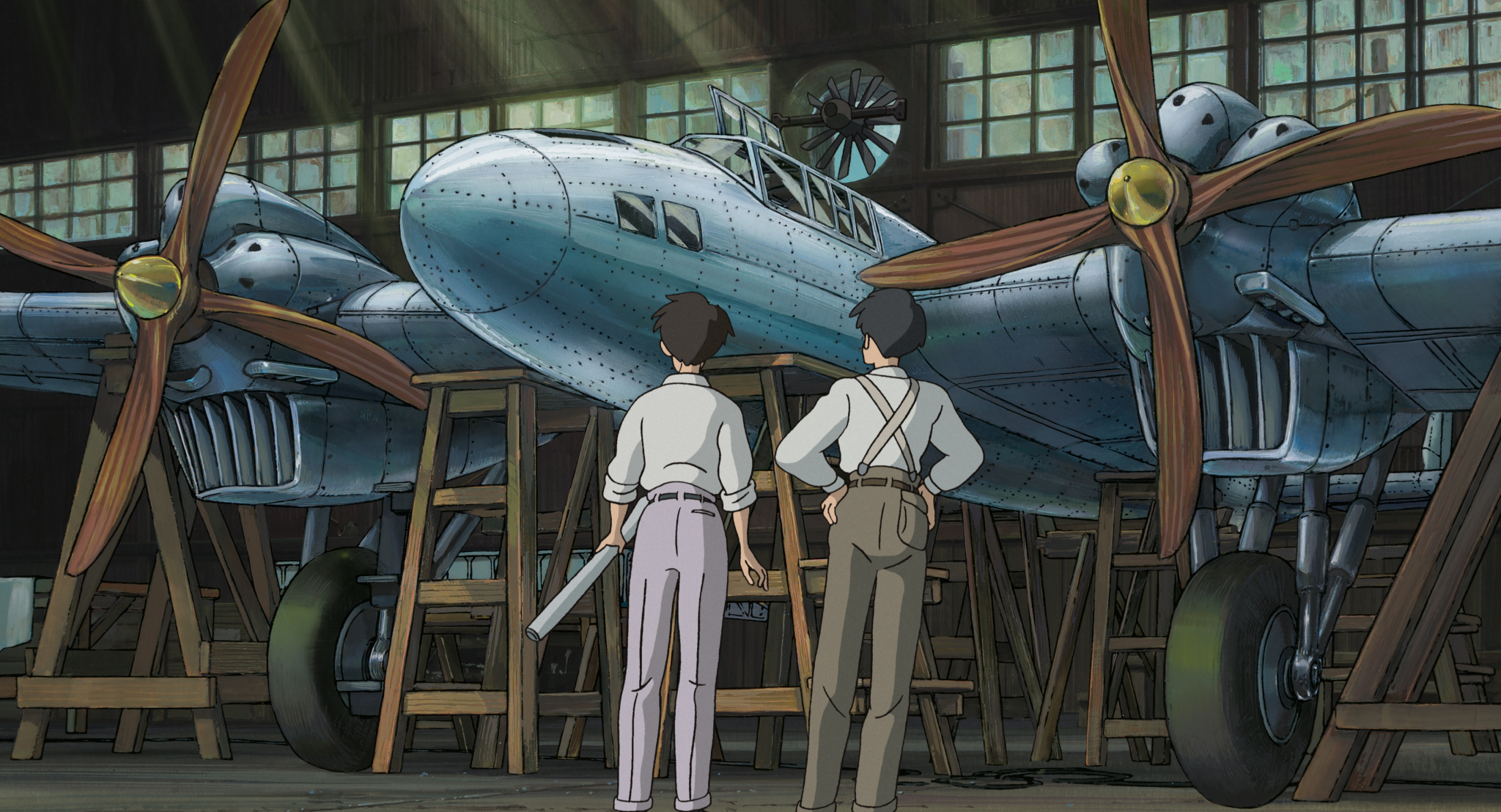
"We must try to live": A review of 'The Wind Rises'


(Disclaimer: I watched the Japanese version with English subtitles; a friend mentioned that the English dub is a bit heavier handed and some of the subtleties are obscured)

Hayao Miyazaki has been hailed as one of Japan's finest animators and artists of our time, bringing us such beautiful films as Spirited Away, Howl's Moving Castle and Kiki's Delivery Service. After creating a film for over three decades, The Wind Rises was Miyazaki's final film before announcing his retirement in September 2013 and was nominated for an Academy Award for "Best Animated Picture". Hayao Miyazaki has always had a certain fascination with flight, such as Kiki's broomstick and Howl's wizarding capabilities and the aircrafts of war, so it is not really surprising that his last film would follow suit. The film follows aeronautical engineer Jiro Horikoshi as he aspires to engineer the most beautiful airplane. The film begins with his childhood in a traditional Japanese household and ends with the test flight of his prototype in the rapidly industrializing nation before the start of World War II.

This is perhaps Miyazaki's most complex films both in terms of plot and character development. The film had a slow build for me in the first half. Although the 'goal' is introduced early on, in a similar way to most of his films, we see Jiro going through school and his company faces failure after failure. It isn't immediately apparent how the protagonist is going to achieve his goal and what's more, the aforementioned 'goal' doesn't even seem to be the driving force of the action. Throughout the film, we see relationships being built and scenes that aren't serving immediately to bring him closer to his dream. Furthermore, because the film is a biopic it is the first film that is based in reality rather than in the fantastical. Audiences are meant to relate to what's going on on the screen rather than use the film to escape the mundane as they have before. In many of his previous films, a quest is outlined for the protagonist and is eventually resolved at the end of film with all problems being solved. In The Wind Rises, the plot is much more bittersweet and in my opinion, realistic. At the same time that something wonderful happened for Jiro, something terrible happened as well. But despite that, we are not meant to think that the end of the film was the stopping point for the characters. Rather, we as viewers were privileged to see a part of his life that continued after the film. Although tragedy strikes, it is not the end of Jiro's life-he simply goes on. The great exception to the film's reality of course are the dreamscapes, which remind me of whimsical versions of the dream palaces we see in Sherlock. These times allow Jiro to predict and solve problems in design as well as 'meeting' people, like his idol, an engineering virtuoso by the name of Caproni. Nevertheless, the film remains grounded in the fact that for the most part it is trying to portray a time and place that really existed.

It also attempts to portray people that really existed. Although there was of course some creative license with the characters, there was actually an engineer named Jiro who designed airplanes for the military. In a slight departure from his other films,  I didn't find any one character to be compelling in particular. Jiro is portrayed as the dreamer but lacks some of the charisma of Howl or Ashitaka; Naoko is beautiful and sweet but isn't feisty like Kiki. But rather than creating one character to bear the weight of the film on their shoulders, I think that Miyazaki effectively shows many nuances of human nature that he simply could not do in any of his other films. In many ways, the characters uniformly feel more mature, which will certainly resonate with older audiences. While there have been adults in the other films, they are usually they are depicted as evil or petulant. In previous cases, many of the protagonists are children and the film is their bildungsroman but we do not see them after they've  come of age. The characters in The Wind Rises are mainly adults and deal with situations that I think a lot of young adults can relate to- like rerouting a dream, persistence despite failure and especially losing a loved one. I especially think that he shined at showing compassion in the face of adversity: friendship in spite of professional competition, love in spite of the inevitable end. It is the ordinary small moments that I think make the film so extraordinary. The film is not built on cinematic shots and encounters with magical beasts, but rather on subtle moments like Jiro not being able to control tears falling onto his designs or holding his wife's hand while he continues to work late at night. Rather presenting than a one dimensional hero or heroine on a quest, the film seeks to show a time and place-which is refreshing but also made a strong impression.

Joe Hisaishi returns to score the film with the Yomiuri Symphony Orchestra. Admittedly, I had to go back and find the soundtrack online because it is so secondary compared to the film action itself. That is not to say that the music was not important to the overall film but compared to how different the film itself, the score is much more prototypical of Hisaishi's other work. However, it is notable that Hisaishi chose to use a guitar as the solo instrument for many of the tracks as opposed to the piano. Although many of his works have been transcribed for guitar, I think this is the first to use it in the original score. The use of guitar in conjunction with that of an accordion ties the film strongly to the European musical tradition, which is fitting considering how much of the film is spent idolizing German and Italian engineering innovation. In one reiteration of the main theme, Hisaishi makes use of the brass section and drums to underscore the military aspect of the film toward the end of the film. I'm actually a little surprised he didn't use more wind instruments but perhaps that is a little too obvious a choice. Personally, there is no one memorable ear-worm melody that I can pick out at random and I am not likely to listen to the soundtrack out of the context of the film-it doesn't really make sense without the screenplay. However, the music nicely supports the overall feel of the film as a whole.

The Wind Rises is quite a departure from the Miyazaki's past work and many critics have noted that the film seems to be reflective of Miyazaki himself, a myopic dreamer. When it was released, the film was highly controversial given that many parts of the world have not healed yet from the damage inflicted by the Kamikaze missions, conducted by airplanes engineered by the real-life Jiro. While I don't have enough a background in history to really comment on the political nature of the film, I found the film to be exceptionally complex compared to his previous work. If you were expecting the usual feel-good Studio Ghibli film Ã  la Totoro, this is not the film for you. While still a beautiful artistic piece, The Wind Rises is not flashy and theatrical in the way that his other films have been but I think it is probably his most well-written film. The Wind Rises is both sentimental and poetic but not overly so-the perfect culmination to a long and distinguished career in animation. 

Onwards and Upwards.

It's hard to believe that my final term of my undergraduate career begins in less than a week. After the fervor of last week, things finally feel like they are settling a bit-though I know this is just the calm between the storms and by this time next week I am sure I'll be relishing the opportunity to sleep past 8.

Still, I'm not quite dreading the return to school the way that I usually do. But maybe that's because it never felt like I ever stopped working completely. Throughout break, I've been chipping away at various projects. It hasn't been an overwhelming amount of work but it has been steady. Although I don't have much to share with you yet, I am actually kind of amazed that all the things that needed to get done did.

Spring semester has never gone particularly well for me; we spend the first 60% shrouded in darkness and lethargy and then suddenly it's the end of March and both flowers and finals arrive. I've felt this pattern since high school but weirdly enough I don't feel that way about this year. We haven't had to be holed up in our houses because of ridiculous cold or snowstorms so it honestly feels like we're just inching closer and closer to spring and to sunshine. (Though of course now that I say that, we're probably going to have a Nor'easter tomorrow). It sounds so silly to be affected so profoundly by the weather but it actually helps me feel more like the spring is a continuation of sorts of the work that I've been doing so far, rather than a new and terrible obstacle to be overcome. Going back to my schoolwork isn't a prison or a terrible sentence, you just carry on like you have before.

How ironic that I finally figure out how to exist somewhere, right before I have to leave it.

Goals for each season of 2015

As I've said before, I don't really believe in resolutions made because you were bored or because you needed an excuse to change something about yourself. However, I do have a few activity goals for this year that I hope will be fairly manageable and if they come to fruition, I will absolutely share my experiences with you.

Winter: (Finally) go traying.


For those of you who are not familiar with this term, it refers to sledding down the hill on Severance Green. Traying is listed as one of the "50 things to do before You Graduate" but unfortunately I have not been on campus during any major snow storms in the past few years. I also have not been sledding since grade school and generally stay inside whenever there is inclement weather. Nonetheless, it is one of the several rites of passage so I am setting it as a Winter goal for myself, since it wouldn't be the same to come back and do this as an alumna. Although we've been having a really mild winter so far this year in Massachusetts, I'm hoping that I'll finally get one good trek in before I graduate.


Spring: Travel somewhere on my own

Of course I have traipsed around Boston solo before but the idea of going to a new place completely by yourself has a certain thrill that grabbing coffee at MIT does not. At this moment, the idea of going somewhere where I don't speak the language seems a little bit daunting but I would be more than game for a domestic trip. I feel like traveling on your own means that you have to be completely self-sufficient, if only for a short amount of time. As of right now, my best chance at doing this seems to be our March recess, if money and the Fates allow.


Summer: Waterside evening at the ICA

I've wanted to go to the Institute of Contemporary Art for a while, not least of all because it affords visitors a beautiful view of the port and Boston skyline. There is also nothing I hate more about the summer than humidity so this seems to take care of that nicely. A bottle of wine with friends on the marina sounds just fine to me, thank you.

Fall-Go to the Head of the Charles

I used to go to music school in Cambridge so I've passed through Cambridge during the regatta for the better part of a decade. However, I've never actually seen any of the races; seems like there's no time like the present.

Saturday, January 10, 2015

Going to seek a Great Perhaps

Another relatively short entry for now; hopefully after next week these can get longer, more interesting and more eloquent but for now, I will write about what I currently know. It seems like the next few months or so are a time of immense transition. And not just for me but for a lot of the people in my life-not just the graduating seniors. I think when I take stock of things in a year, things will definitely feel very different. I feel like even though everyone is finally settled in where they currently are, it's time to move upwards and onwards to new places. 
All of this is a bit confusing for me, because I understand that change is good in the long term. Change means things are still in the process of happening and getting better...but it is also slightly terrifying. Moving into new places and meeting new people might be exhilarating for some but for me, the thought of diving into something completely new without any context to anchor me is incredibly anxiety-inducing.

It is so odd to think that my time is limited and a lot of the people that are here today will be scattered around the globe in the next few months. People are getting married, moving away and...moving on. I feel like my mood oscillates between being so ready to go onto greater things myself and being terribly afraid that I am wholly unprepared for what the world has in store for me. 

The world seems to be spinning faster and faster and the moment that I stop to take stock of what is happening, the less and less time I seem to have. I think I definitely took for granted that there would be four years of my life that would more or less just build on themselves and now I must confront something new. 

Because there is no turning back, nor would I want to. Although I am not one to be easily bored, I think that while known things are safe, they are also stagnant. I think that in moving forward, there should be some balance of the fear of the unknown(because I think it is a useful instinct), hope that things could be wonderful, and comfort in the fact that if it isn't wonderful, it isn't for forever-it's just for now. I hope that 2015 is the year where we all have the courage to take that first step and make something spectacular. 

Wednesday, December 31, 2014

The 2014 Retrospective

I'm running out of hours to do this so this will be short and (hopefully) sweet.

I have never really believed that the new calendar year necessarily meant a blank slate and a fresh start, since in this regard things like the beginnings of semesters seem more meaningful. But it is a very convenient time to look back, take stock of the year and be grateful for the passing of time.

2014 got off to a very tumultuous start and it hasn't really slowed down much since then. It's been a whirlwind year full of weddings and tests and lots of other things.

But despite all of the crazy, it has also been a year where I have known an overwhelming amount of love and support from those around me. I didn't participate in Facebook's annual "Year in Review" because for the first time since I can remember, my most meaningful moments happened offline and there are no electronic records. As a millennial who spent(is spending) most of her formative years on the internet and connected to her phone, that is kind of a big deal. Also, as someone who likes playing with words, the mostly visual interface wasn't really the best way to approach this task.

When I look back at my year, the memories that stick out the most are conversations. They were times when I was just really honest with someone and they reciprocated. These conversations happened in very common places-buses, hallways, meals that I hadn't even intended on leaving my room for. It might sound silly but I think that for a long time, I couldn't even get out of my head enough to even make those possible-not to mention that they make you feel really vulnerable, which is a very uncomfortable feeling. So it's a small change but a really important one for me.

Compared this time last year, I think a lot calmer than I was-though now that I think about it, I don't know that there is any really good cause for it. In 2013, 2014 was a huge beastly unknown. Despite 2015 also being somewhat of an unknown, I don't quite feel as frantic as I did then. I think this past year has shown me that no amount of worrying about and wishing for things will cause any meaningful change in the course of events. There's no way to eliminate those feelings (nor should we, because they're valid), but they don't need to be all-consuming.

As it looks right now, 2015 looks like a pretty big year as well. I don't really believe in huge overhauls just because we're flipping the page of the calendar but hopefully I can write here once a week, among several other small goals. Funnily enough though, I am no longer afraid of the fact that I am leaving Wellesley this year.

Onwards and upwards to the next big adventure, lovelies.

Saturday, November 29, 2014

What I am Thankful for in 2014

I am still grateful for all the things I was last year-for fuzzy socks, for tea, and of course for fairytales. These things are comforting and I will always be able to return to such material comforts. But there is one thing that I can't emphasize enough and probably will never be able to be thankful for enough, so long as I live.

I have been blessed with wonderful people in my life, both friends and family (though the line betwixt them is pretty thin).
Simply put, they are the reason that I haven't just stopped-just sat down and refused to go forward.

I am, have always been and will forevermore be grateful to my family. Yes, they push my buttons for fun but I have never questioned that they have my best interests at heart. Thanks to technology, you can basically carry me in your pocket and I can carry you in mine.

But I wanted to spend a little more time talking about my friends this year, the people that I have somehow convinced that it is a good idea to hang around me for extended amounts of time. From an emotional and psychological perspective, it would be so much easier to hold everyone at arm's length. It has definitely been an process for me this past year, trying to figure out if it's even okay for me to admit to people that I don't have it all together, that there wasn't a plan, because I was so terrified of the subsequent judgement that would come.

But a lot of times, the judgement never came.

I have no doubt that I will remember a lot of the anxiety and stress of this past year down the road. But I hope that I will never forget the other times too-the countless times that people have calmed me down when I freaked out that I had no future (as I am prone to do). The times that I actually left my room to have meals with people and felt a little bit less like an academic robot and more like a human again. Saturday morning coffee runs, late nights in lab, walks through art galleries, walks through the mall, the rare instances that we ventured off campus into the big bright city. Thank you for not giving up on me when I retreated into my introverted self and for still trying to coax me out of my room anyways.

Writing them out now, they aren't the most daring and bold stories-they probably wouldn't be impressive to those who enjoy living on the edge. But they have been the most important times to me and the best part of all of this is, is that they can happen every day that I am with my friends. They have truly seen me at my best, my worst and everything in between. Despite me wanting to curl up into a ball at what seems like every minor setback, my friends have picked me up again, fed me (very important), and set me on my path again. They have proved that we can endure this really weird and stressful time together and I could not be doing what I am doing without them by my side.

With lovely, sassy and wonderful people like that, could anyone truly be lost?

Sunday, October 19, 2014

Is it possible to run out of words?

Because it sure feels like I already have.

A lot of my classes have lots of weekly writing assignments so I have been doing a lot more reading and writing about things than I ever have in previous semesters. And while it is in subjects that I find to be intellectually stimulating, I somehow find myself in the position of not knowing what to say. I've done the reading, I've done the outlining but right now, I can't put words on paper to make something meaningful and distinctly mine.

Considering it is actually my job to work with words, finding the best and most precise words and presenting them with finesse, it seems like a kind of odd problem to have-not being able to say anything.

I don't actually have any profound messages that I wanted to say with this, no romantic metaphorical resonances I wanted to strike. I just wanted to share. Maybe I just need more sleep.

Saturday, October 18, 2014

The Bees are at their Breaking Point: If they die, we might go with them

While some may think of distant poverty-stricken countries when hearing the phrase “wide-spread hunger”, it is the reality that our nation will be faced with if something is not done to conserve honeybee colonies. Since 2006, scientists have reported that honeybee colonies are dying at record rates of 30%, a substantial jump from the previous annual average of 5-10% and the number is only increasing. It is easy to think that this is an esoteric issue that is best left to the crusades of well-meaning yet eccentric environmentalists. However, this is a natural disaster that affects the daily life of the consumer. Considering that bees are directly or indirectly responsible for roughly 75% of the food that we eat, the decline of the honeybees has very dire implications for our future as a nation.

Do you enjoy consuming food? If so, then the honeybee crisis is actually incredibly relevant to you. One may think that honey is the only commodity that the bees contribute to the food market. However, the US Department of Agriculture reports that honeybees are responsible for pollinating over $15 billion of crops each year and agricultural products constitute some of the fastest growing American exports. Honeybees pollinate many commercial crops including apples, almonds, citrus fruits and many more. Some crops, like almonds, rely exclusively on professional bee pollination each year on a massive scale. Beekeeping is in and of itself a dynamic industry and farms pay to have truckloads of bees help them out each spring. There are many other indirect ways that bees affect the food industry as well. For example, crops like alfalfa are pollinated by bees but not directly used as a human food source. However, they are then used to feed cows that are in turn responsible for producing many dairy products as well as being used for meat. One may wonder why the average consumer may not have noticed this crisis at the food markets but the average price of almonds per pound has actually more than doubled in the last five years. The honeybee population is at the center of the food industry and absolutely crucial to the continued success of the US economy as well.

The honeybee crisis appears to be caused by several of factors. First introduced to the US in the late 1980s,  varroa mites are parasites that have been an increasing problem for the bees in recent years. The mites target the maturing honeybees, causing them to be more susceptible to disease and eventual death. Thus, in colonies affected by the mites, few bees ever reach adulthood. A lonely queen is left to watch over young bees who will never grow up, waiting for workers who will never return.

However, perhaps the most significant factor contributing to the bee crisis is the use of certain insecticides. In 2007, the EPA estimated that the US used a record-breaking 1.1 billion pounds of insecticides.  While insecticides have been used for many years, a new class of nicotine-derived insecticides called neonicotinoids has come under fire most recently. After being approved by the Environmental Protection Agency (EPA) in 2005, the use of neonicotinoids has increased dramatically. However, recent research has come to light supporting the fact that these chemicals can have seriously detrimental effects on honeybee populations. A clinical study showed that honeybees exposed to these compounds were unable to find their way back to their hives and died due to the subsequent lack of protection. Neonicotinoids also differ in their mode of dissemination, as they are ingrained into the seeds of plants and can thus persist for many months when other pesticides might have washed away. The increased use of neonicotinoids correlates to the rise in honeybee mortality and unless something is done, the numbers will only continue to escalate. Furthermore, there is evidence to suggest that although separately the EPA might not consider the insecticides lethal, roughly 20 different chemical residues have been found in devastated beehives. This suggests that the chemicals are unexpectedly far more potent together and play a role in bee deaths. Together the mites and pesticides are the perfect storm to absolutely decimate honeybee populations.


We do not have to stand idle watching this crisis unfold; there are several things that we can do. By buying food that has not been treated with pesticides, we can change the market. Companies currently have no incentive to choose bee-friendly methods but might be swayed by consumer demands. However, organic foods have become a bit of cultural cache here in the US and are not necessarily accessible to everyone. So more than just hoping to change the markets indirectly, we can take action by appealing to the legislative bodies, which could lead to a solution with longevity. The European Union has already banned the use of certain pesticides and the time has come for us to finally try and open the conversation here that our European counterparts have been having for many years. This is not an issue that is only for the tree-hugging bohemians, it is an issue that concerns us all. Consider this the call to arms to help our apiarian comrades.

Wednesday, October 8, 2014

Hacking the Bacterial Social Network

While we update our Twitters, Facebooks and Instagrams throughout the day, many might be unaware that a similar phenomenon is happening at the microbial level as well. In a two-part lecture, Bonnie Bassler, a professor and researcher at Princeton University, proposed that bacteria everywhere from the ocean to our gut relay and receive messages to one another through chemical signals. These signals help the bacteria know when to change their behaviour when other bacteria are around. For some, that means illuminating the marine darkness. For others, it means producing toxic chemicals to wreak havoc on our immune systems. Many disease-causing bacteria actually use this chemical network to sense when there are enough of their comrades before launching an attack against the immune system. But if the message can be sent, can it then be intercepted? In addition to presenting their previous research on what is currently known about this signaling system and combining several scientific disciplines, Bassler and her team worked with the bacterium that causes cholera to see if they could do just that.

Central to understanding the work of the researchers is the concept of quorum sensing. Bacteria have a chemical “language” that allows for communication with other members of the species, when they would otherwise be completely isolated from one another. When they receive messages from other bacteria, the bacteria then knows to modify its behaviour. Sometimes this means producing light, as the researchers found from their initial work with a species of marine bacteria. For others, the bacteria know to produce toxins that would otherwise be ineffective to carry out alone. Furthermore, bacterial species are able to transmit messages that can be received by other bacterial species as well. Long thought to be isolated but co-existing entities, Bassler and her associates proved that there is actually a bacterial nexus existing right beneath our eyes.

Armed with the knowledge of bacterial communication, Bassler and her team wanted to see if it was possible to hijack this communication network. Although the team initially worked with marine bacteria, Bassler turned her attention to the pathogenic bacteria that causes cholera, under the assumption that it uses the same chemical network as well. Cholera is a fast-disease that causes dehydration through extreme diarrhea, caused by the release of toxins by a certain species of bacteria. Though it often calls to mind images of a distant past, cholera still claims up to 120, 000 lives every year and can kill within hours after the onset of infection. Unlike some of the other known pathogens, the bacterium that causes cholera is most dangerous at low levels. When there are not too many other bacteria of the same species around, cholera-causing bacteria ramp up the productions of toxins that make us sick. When the numbers of bacteria increase, the cells send out a message to stop producing toxins and instead focus their attention towards infecting a new host.

For cholera-causing bacteria specifically, Bassler and her team wanted to see if they could send the cells false intelligence.  Bassler’s team wanted to manipulate experimental cells by sending them a synthetic signal to stop producing toxins while the cells were at low density. After isolating and characterizing what they believed to be this chemical signal responsible for turning off toxin-production, the team created a synthetic molecule that they hoped would mimic the actions of the real “off” signal.  When they added the synthetic molecule to cells infected with the bacteria, toxin production decreased dramatically.  The team then moved onto mice infected with cholera and saw similar drops in toxin levels. With the addition of the synthetic molecule, the researchers were able to restore the animals to health.


The team’s findings are incredibly exciting from a curative perspective. It implies that patients infected with the bacteria could be treated effectively and efficiently. However, the chemical mechanism this treatment does not necessarily work for all species of bacteria. The signaling system is complex and many other pathogens use the opposite mechanism whereby they are largely inactive but ramp up virulence at high densities. Therefore, instead of trying to mimic the chemical signal directly, researchers would need to create a synthetic antagonist (an off-switch) that is a molecule that would counteract the messenger rather than trying to duplicate the messenger itself. We should definitely take heart in the fact that some of the signals are species-specific. This has huge implications for the future of antibiotics. By finding ways to exploit signals for only one species, we can target harmful bacteria without the risk of also targeting good bacteria species or healthy tissue cells. Currently, antibiotics lack specificity and end up killing good and bad bacteria alike in addition to causing painful side-effects. By proposing a novel type of antibiotic, Bassler and her team may have laid the foundation to revolutionize the way that we treat diseases and lead to less noxious medications.